Description
A high-throughput, regenerative 192-channel battery cell testing system designed for cylindrical lithium cells (18650–33140), delivering precise formation, grading, and chemical composition analysis with excellent energy efficiency.

/home/u223602659/domains/wpsoftvence.com/public_html/muskannew/wp-content/mu-plugins
A high-throughput, regenerative 192-channel battery cell testing system designed for cylindrical lithium cells (18650–33140), delivering precise formation, grading, and chemical composition analysis with excellent energy efficiency.
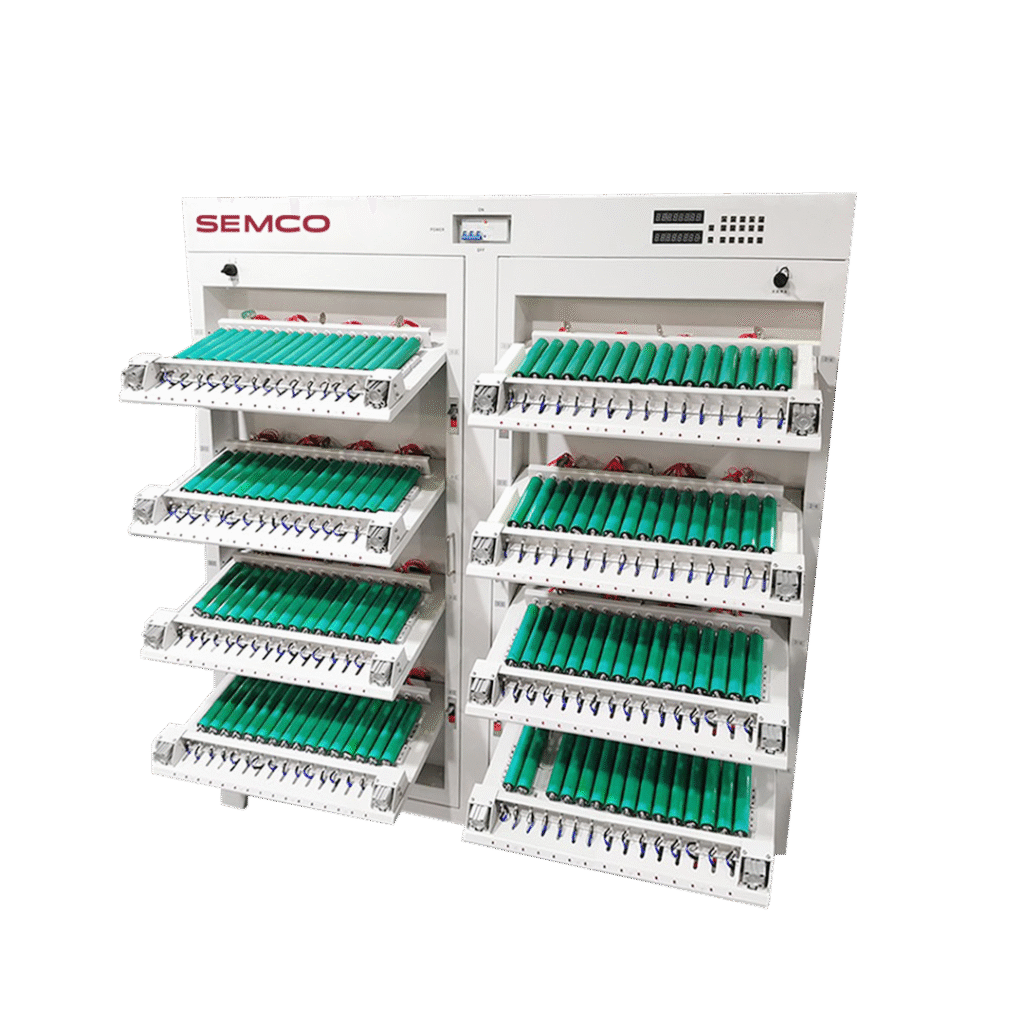
The Semco SI-D ES 5V 20A 192CH is an advanced rechargeable battery detection and formation system built for medium-to-large scale lithium-ion cell production. Supporting 192 independent channels, each channel operates with its own fully isolated constant-current and constant-voltage power source, ensuring stable operation without cross-channel interference.
The system adopts a four-wire Kelvin measurement method, significantly improving voltage and current accuracy during charge and discharge. With a fast sampling architecture, the entire cabinet completes inspection within ≤6 seconds, making it highly suitable for high-throughput production lines.
Its regenerative design feeds discharge energy back to the power system, reducing heat generation and lowering operational energy costs. The Windows-based control software offers a powerful yet intuitive interface, allowing users to configure up to 32 process steps and 256 cycles, visualize real-time dynamic curves, and manage process libraries. With RS485/WiFi communication, a single host computer can monitor up to 10 devices, enabling centralized control and scalable factory deployment.
Cell Aging Machines are designed to stabilize lithium-ion cells through controlled charge and discharge cycles, validating capacity, voltage consistency, and thermal behavior before assembly.

Battery Pack Testers perform complete electrical and safety validation, including voltage, current, insulation resistance, and protection checks.

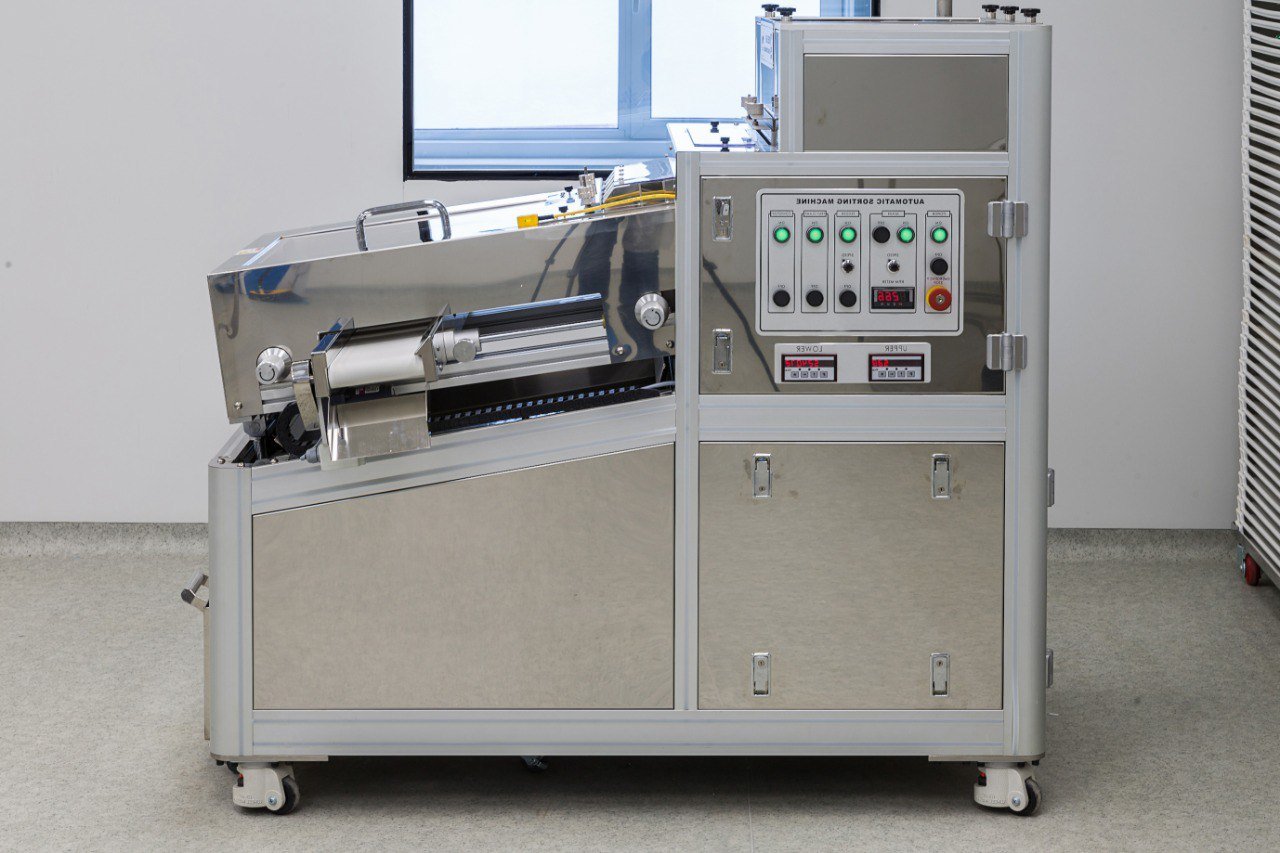
LOCV Sorting machines measure open circuit voltage to group cells with consistent electrical characteristics, improving performance and lifespan.

Module Stacking systems precisely align and stack battery cells into mechanically stable modules for downstream processing.

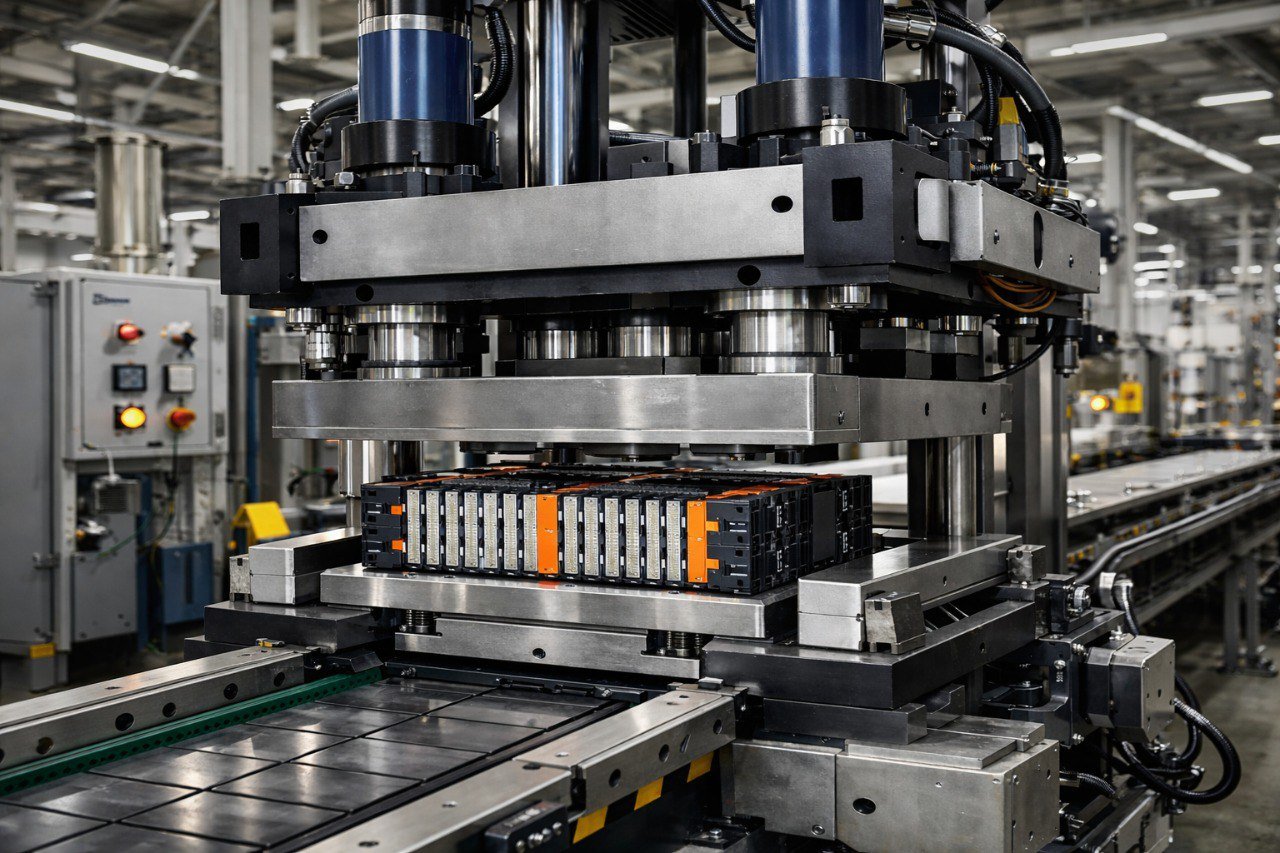
Compression machines apply uniform pressure to enhance module strength, thermal contact, and long-term durability.

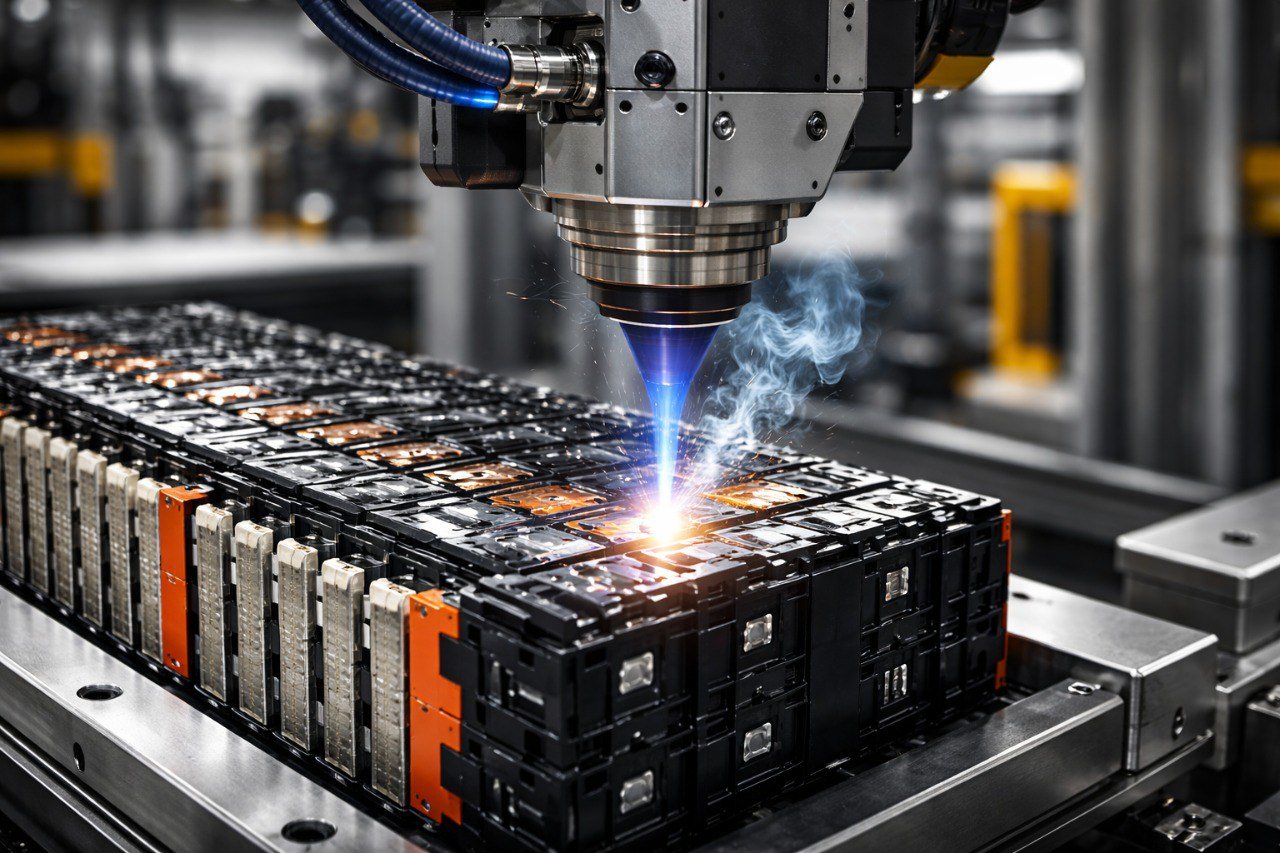
Laser Cleaning removes oxides and contaminants from battery tabs and terminals, ensuring clean, high-quality welding surfaces.

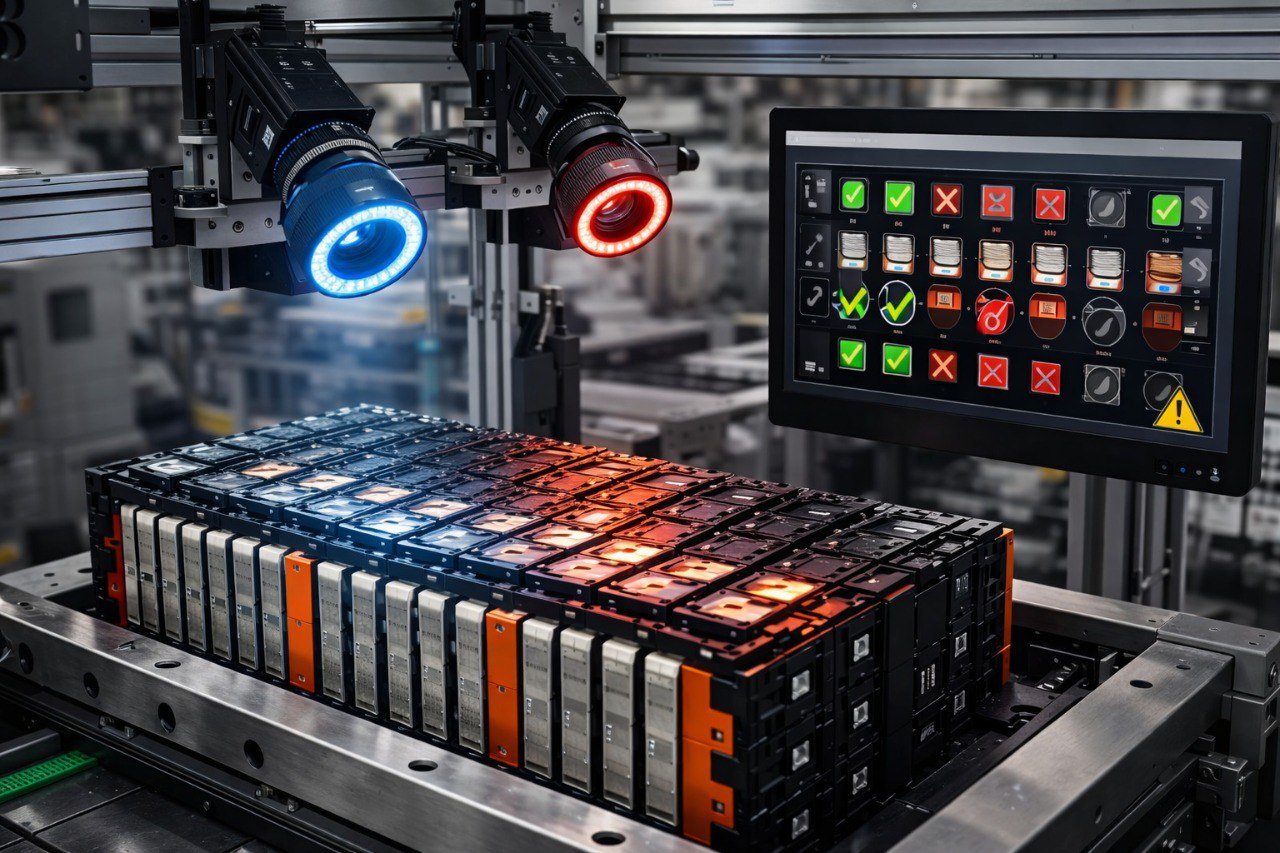
Vision-based polarity and CCD inspection detects alignment errors, defects, and missing components early in the process.

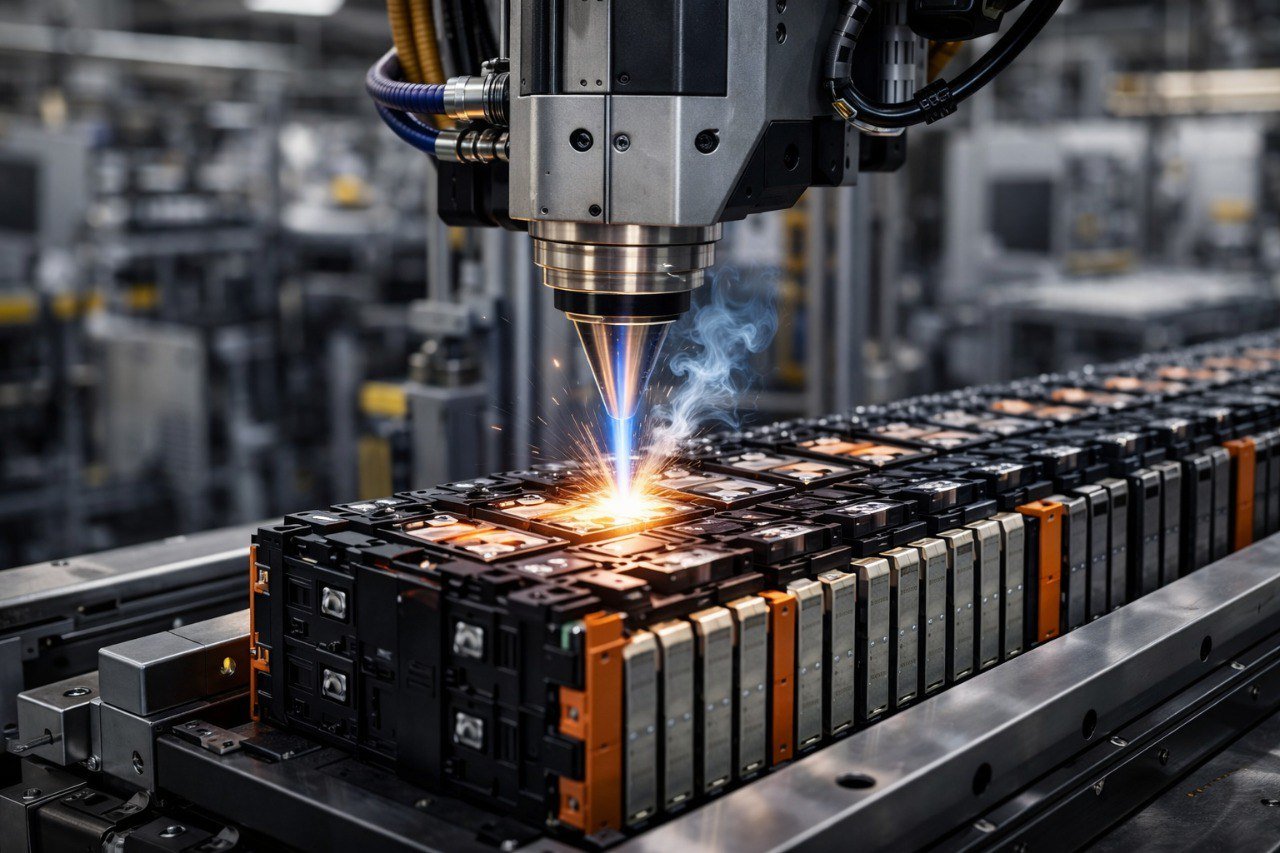
Laser Welding machines deliver precise, repeatable, high-strength joints with minimal heat impact.

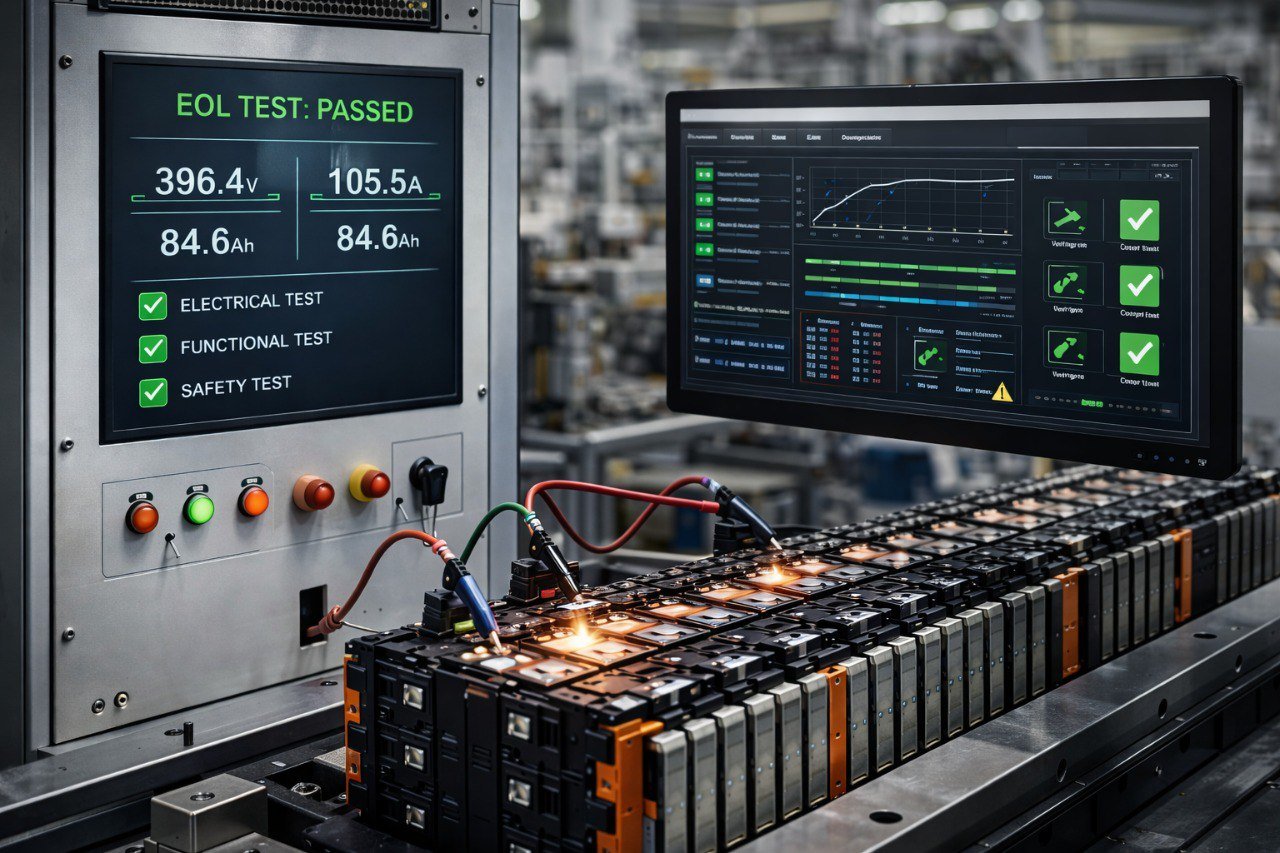
End-of-Line testing validates electrical, functional, and safety performance before pack integration.

The Pack Line integrates final assembly, enclosure installation, and testing for scalable battery production.

EV battery production, energy storage manufacturing, battery research labs, electronics assembly, and OEM-based fabrication units.
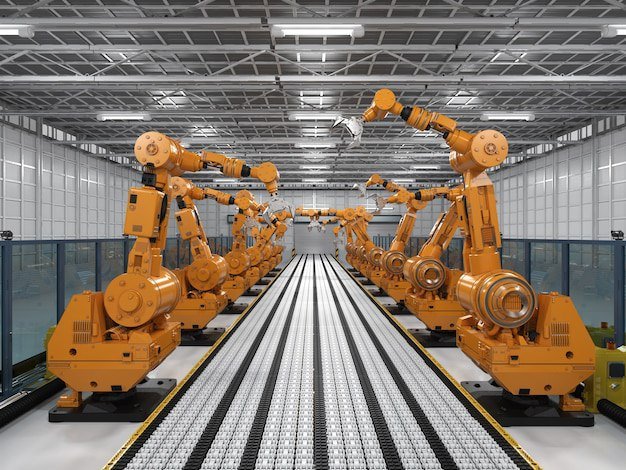
This equipment is designed to support efficient and accurate battery assembly and testing workflows. With durable construction, precision control, and user-friendly operation, it delivers consistent performance for both small-scale and large-scale production environments.
Product Name
Description
The product comes with a dedicated support and service package that includes activation, calibration assistance, and post-installation guidance.
A high-throughput, regenerative 192-channel battery cell testing system designed for cylindrical lithium cells (18650–33140), delivering precise formation, grading, and chemical composition analysis with excellent energy efficiency.
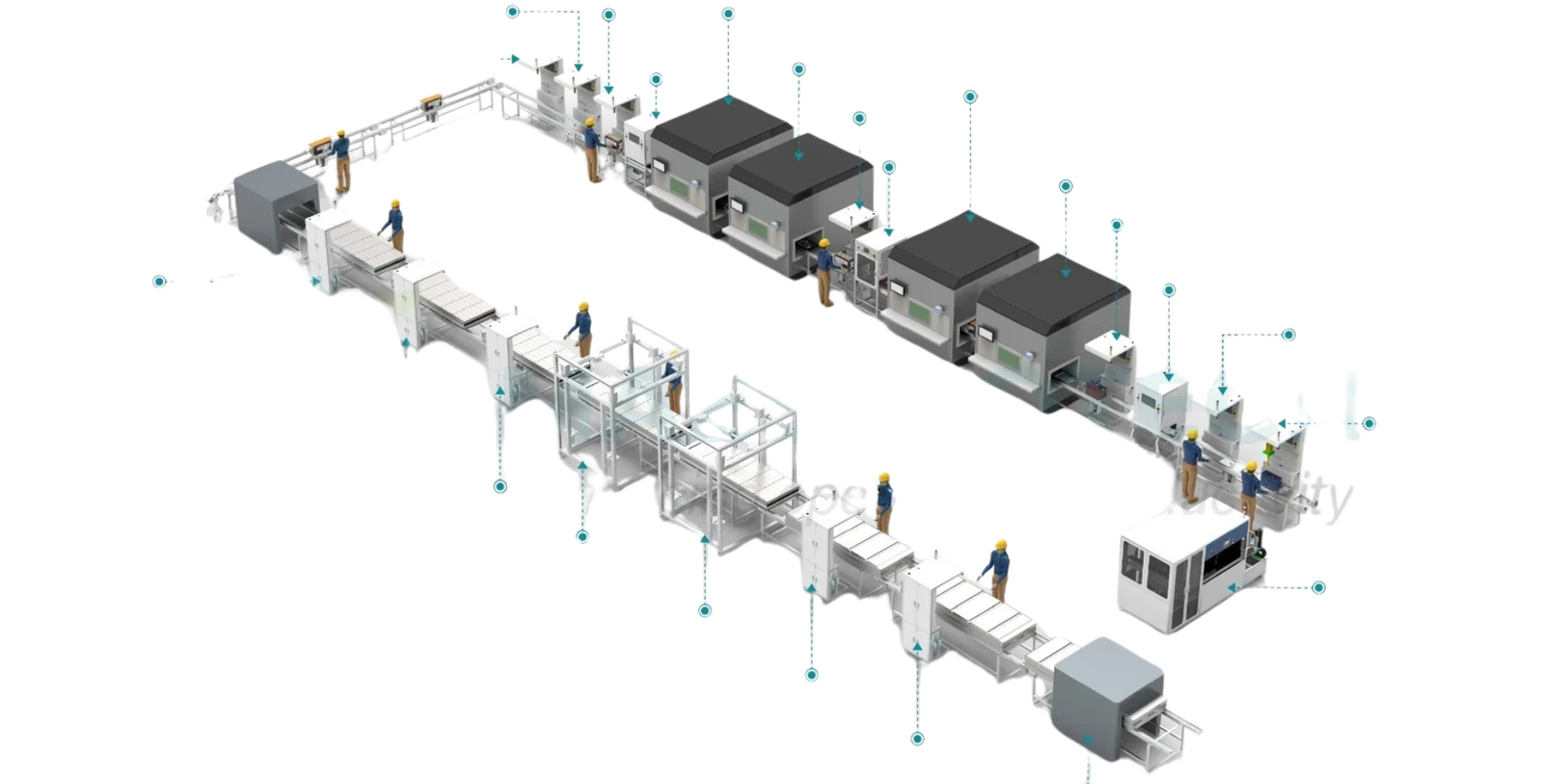
Find quick answers to common questions about our BESS Assembly Line, including automation capabilities, supported battery types, customization options, safety standards, and production scalability.
Shantanu Shukla –
I recently tested the “5V 20A 192CH-Regenerative” cell grading machine, and I found it to be highly efficient and practical for handling various types of cells. The 192-channel version, allows for simultaneous grading, which speeds up the process significantly compared to manual methods. The regenerative feature is a standout, as it helps save on energy costs and promotes environmental sustainability by reusing energy during operation. While setup and calibration can be time-consuming initially, the intuitive interface makes day-to-day operation straightforward. Overall, these machines are a solid choice for anyone needing efficient and eco-friendly cell grading equipment.